Have you ever wondered what happens during off-season at the museum? How did our animals make their way into our pools? Fishing nets, conservation systems, and unusual discoveries—explore this page to travel behind the scenes at Exploramer.
A fyke net is a stationary trap commonly used in lakes and rivers to collect marine samples.
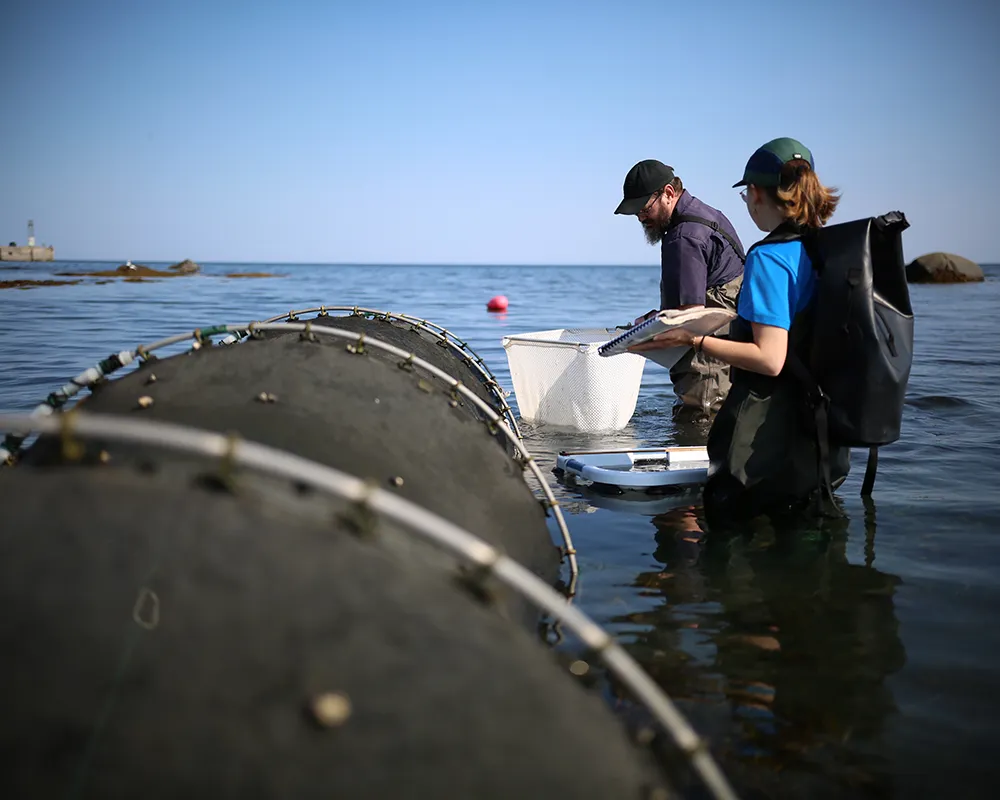
The wharf in Sainte-Anne-des-Monts protects the small bay east of Exploramer from the prevailing winds and resulting waves, which is how we were able to install the fyke net in this spot.
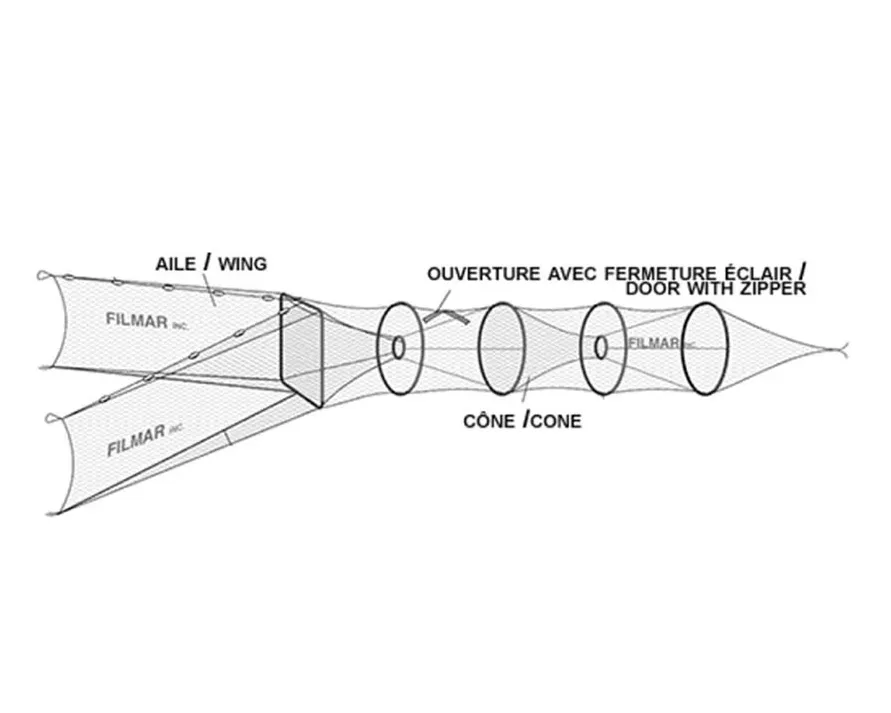
The fyke net works on a simple principle: The wings at the front guide animals toward the cylindrical capture chamber. The chamber opening forms an inward-facing cone (see diagram) that prevents the animals from escaping the way they entered. Unlike other fishing gear, the fyke net is designed to capture animals without killing or injuring them, allowing them to be successfully released back into the water.
The fyke net is positioned with its opening facing the beach. As the tide goes out, fish, invertebrates, and other organisms that ventured into the intertidal zone at high tide move back offshore to avoid becoming stranded as the water recedes. Any organisms that encounter our fyke net swim into it and are captured. But don’t worry—the net is installed so that the animals always have enough water to survive until they are released.
Every day at low tide, the Exploramer team empties the fyke net. The catches are counted, the species are identified and measured, and then they are all released. The data are then shared with the provincial and federal ministries responsible for wildlife (in this case, marine wildlife), providing valuable information about the biodiversity of this small bay and how it changes over the years.
Most museums have a permanent collection. Whether a museum is dedicated to science, history, or culture, it usually houses a collection of objects that reflect its mission and that can be displayed in exhibitions or used for educational activities.
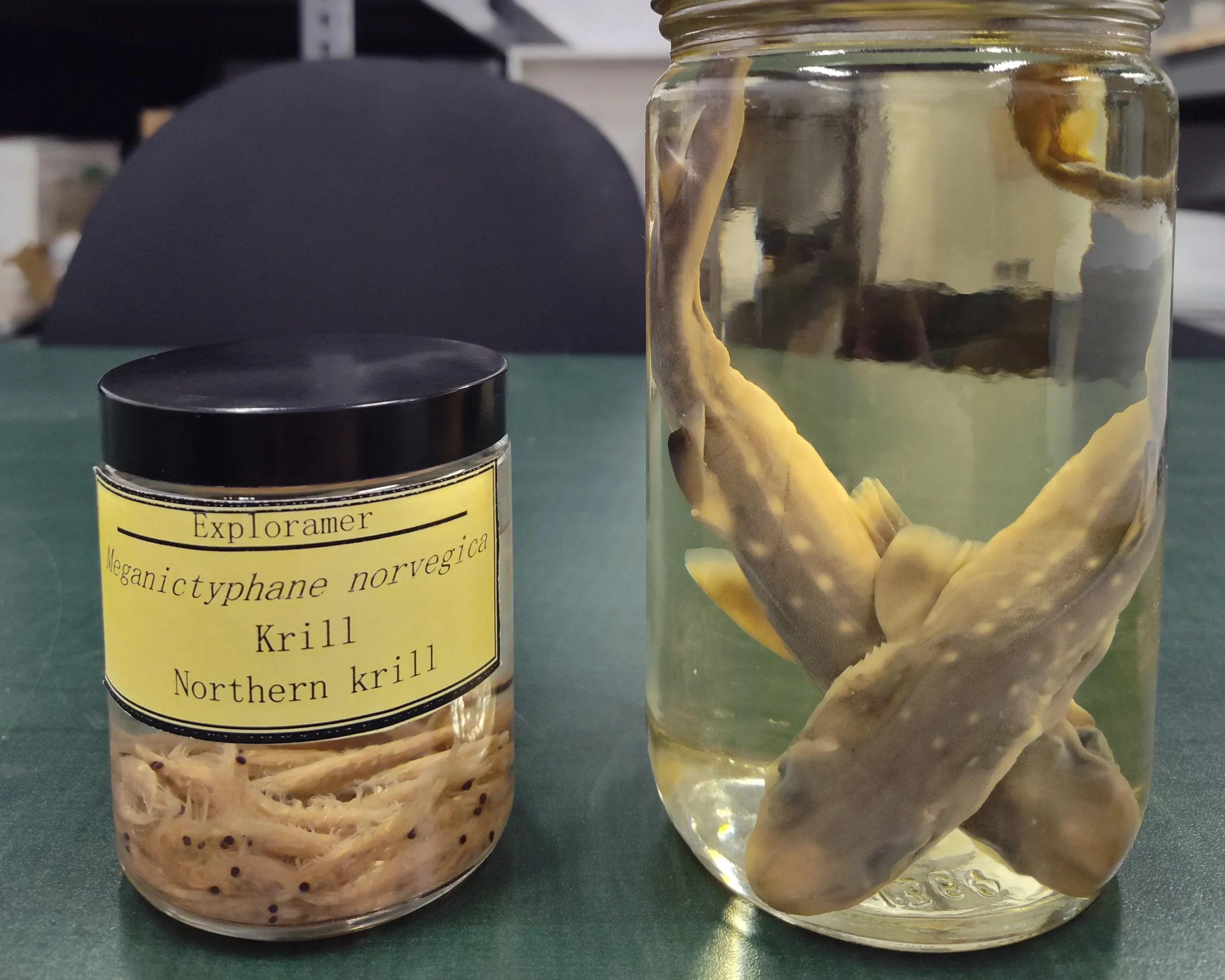
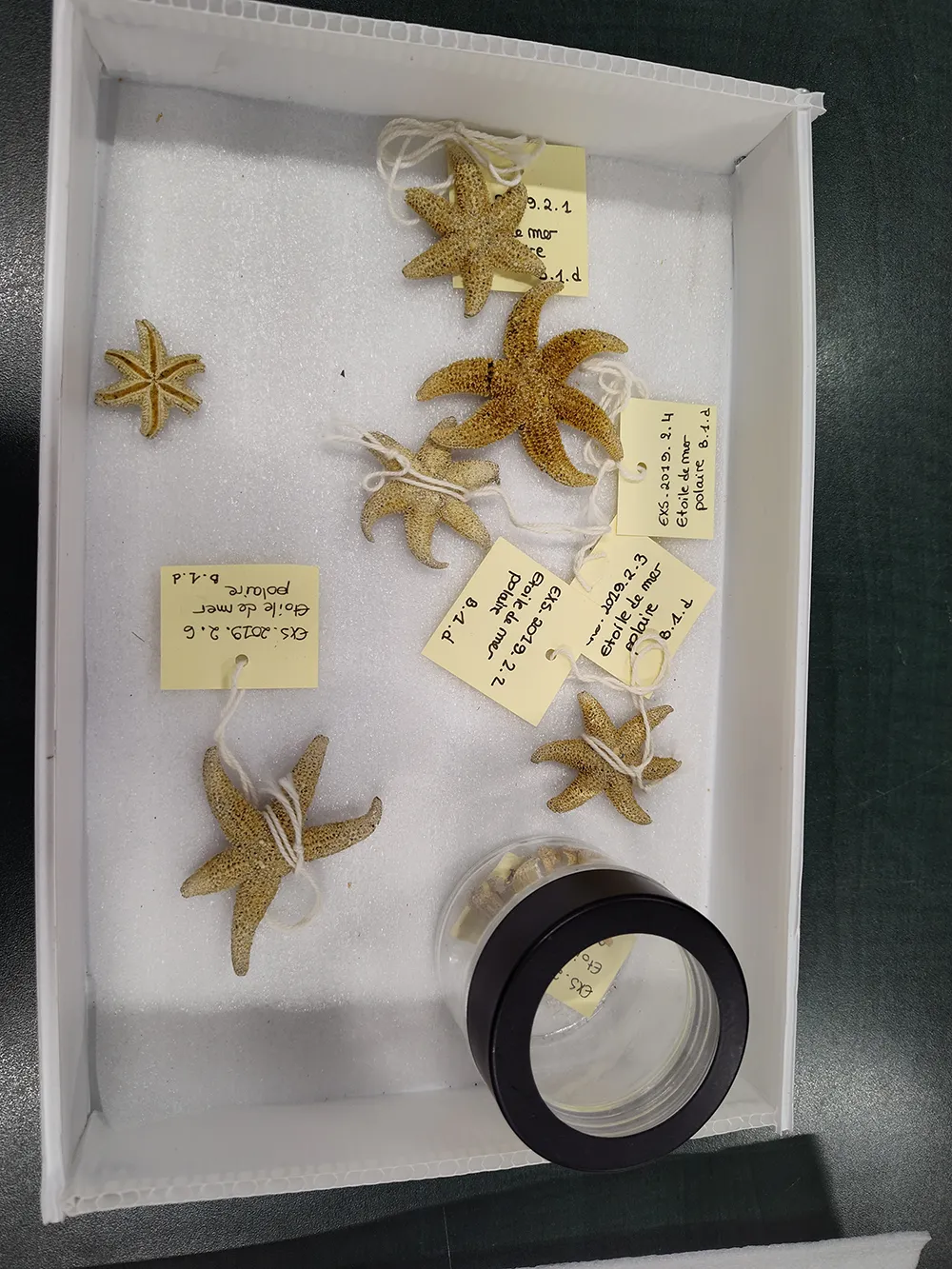
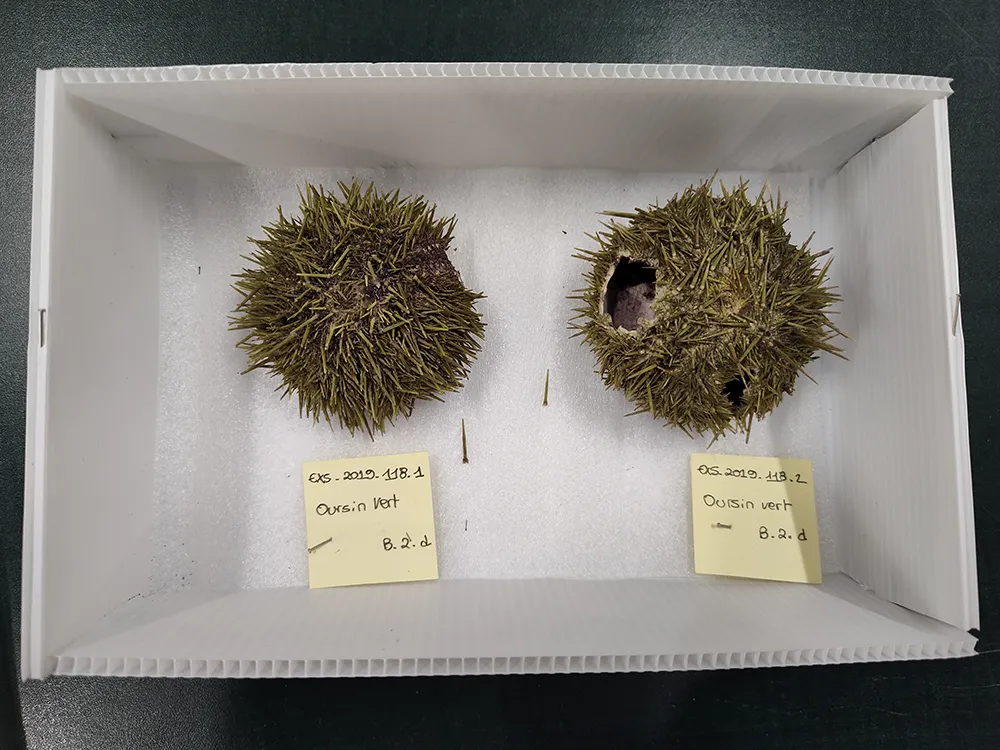
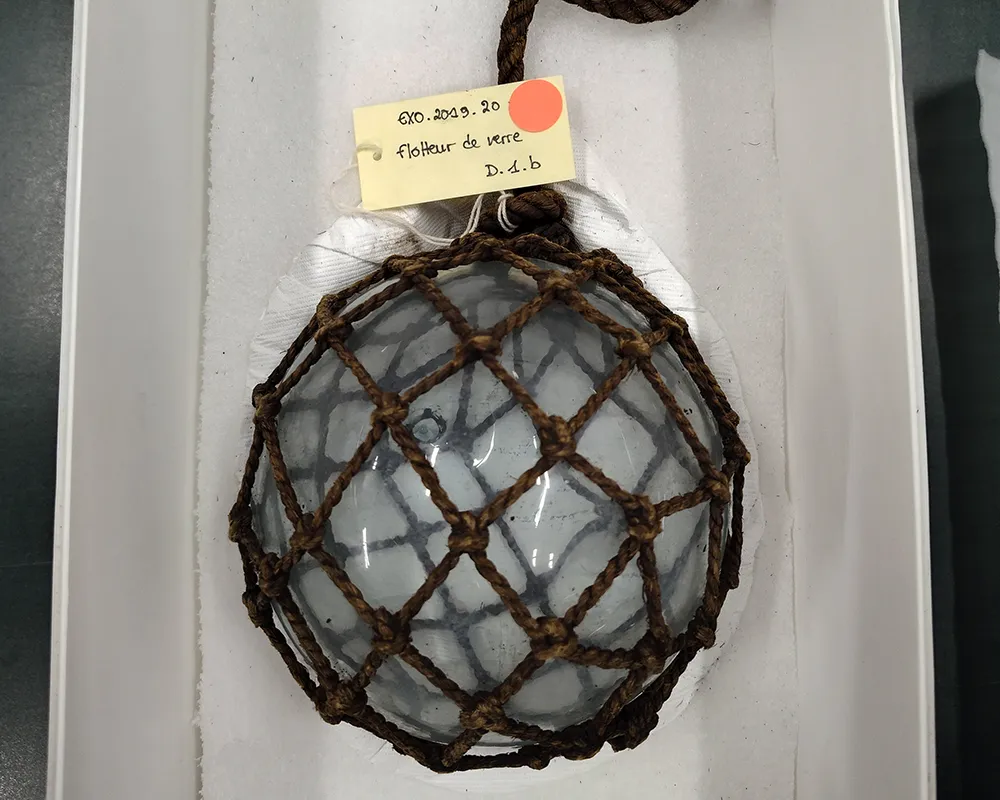
Exploramer’s collection includes 264 objects, including specimens of plants and animals from the St. Lawrence marine environment. In museum-speak, these are known as ecofacts: objects that come directly from nature (as opposed to artifacts that are made by humans). The rest of the collection is made up of fishing implements or artworks inspired by nature.
A great deal of care and attention are needed to keep this collection in good condition. The temperature and humidity levels in the museum’s storage area must be monitored daily to maintain ideal conditions. The air must be kept cool and dry—but not too much.
Preserving organic material over the long term is not always easy, since many specimens would naturally decompose very quickly. Fortunately, several techniques can stop this process. What they all have in common is that they remove or replace the water inside the specimens. Without water, there are far fewer bacteria capable of breaking down specimens.
The right conservation technique depends on the ecofact and its intended use. For example, conserving a fish in a jar of alcohol keeps the specimen flexible, whereas plastination—a technique that replaces the water in tissues with silicone—makes it much easier to handle and display. As you can see, museums use a variety of methods to preserve their collections for future generations.